



[ad_1]
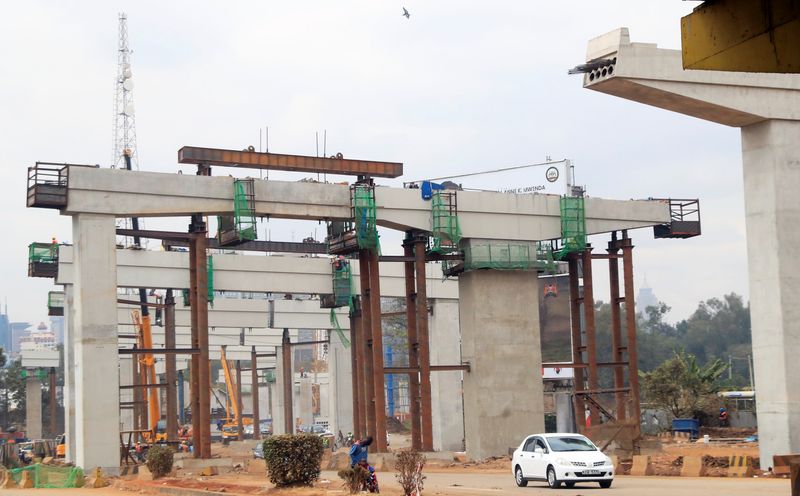
© Reuters. FILE PHOTO: A motorist drives on the controlled section during the construction of the Nairobi Expressway, undertaken by the China Road and Bridge Corporation (CRBC) on a public-private partnership (PPP) basis, along Uhuru highway in Nairobi, Kenya August
NAIROBI (Reuters) – Private sector activity in Kenya contracted in September as rising fuel prices hurt business right across the manufacturing, services, wholesale, retail and construction sectors, a survey showed on Wednesday.
The Stanbic Bank Kenya Purchasing Managers’ Index (PMI) fell to 47.8 in September from 50.6 a month earlier. Readings above 50.0 signal growth in business activity, while those below point to a contraction.
The index has been in contraction territory for most of the year, with only January’s and August’s readings showing growth.
“Elevated inflationary pressures and rising fuel bills acted to dampen client sales, whilst also leading to the second-fastest rise in input costs in the survey’s near-decade history,” Stanbic said in comments accompanying the survey.
In mid-September, the country’s Energy and Petroleum Regulatory Authority said the prices of petrol, diesel and kerosene would rise.
Fuel prices have a big impact on inflation in the East African economy nation as it depends heavily on diesel for transport, power generation and agriculture, while kerosene is used in many households for cooking and lighting.
The survey said a weakening shilling also added to the drop in activity.
The shilling is down 17% against the dollar so far this year and has repeatedly hit fresh lows.
“Furthermore, rising interest rates have been weighing on consumer demand, business levels, and expectations,” Stanbic Bank economist Christopher Legilisho said.
[ad_2]
Source link
