


[ad_1]
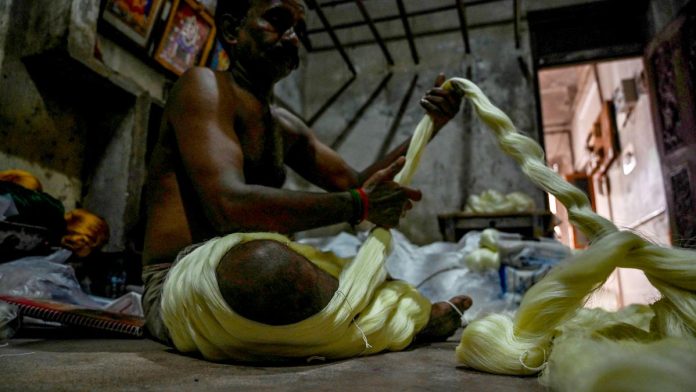
Kancheepuram has become eponymous for its silk saris, both in India and abroad. The Kancheepuram silk sari got its Geographical Indication tag in 2005.
The handloom silk saris are prized attire for weddings and other special occasions: a Kancheepuram silk sari can cost anywhere between ₹10,000 and ₹1,00,000. The intricate process of getting the sari ready involves dyeing of the raw silk, drying it under the scorching sun for four to five hours, spinning, warping, and, finally, weaving. The process can take 10-15 days.
Up to the turn of the century (early 2000s), the Kancheepuram silk sari enjoyed tremendous patronage. But now, with shifting fashion trends, competition from the faster power loom and the availability of cheaper artificial silk, there are fewer buyers, the weavers say. Earlier, customers and traders were willing to wait for two weeks for the sari to get woven but today they prefer readymade ones.
This shift has led to job losses and a drop in revenue for the weavers. The pandemic also had a significant negative impact on the industry as the number of direct customers visiting Kancheepuram dwindled to nothing.
Most of the handloom weavers today are of an older age group or middle-aged. They say that the next generation is neither motivated nor interested in learning and continuing the centuries-old craft.
The major concern of the weavers is that their generation may be the last to practise the profession, leaving no one to carry on their legacy. They hope that Tamil Nadu will take steps to prevent the extinction of their craft.
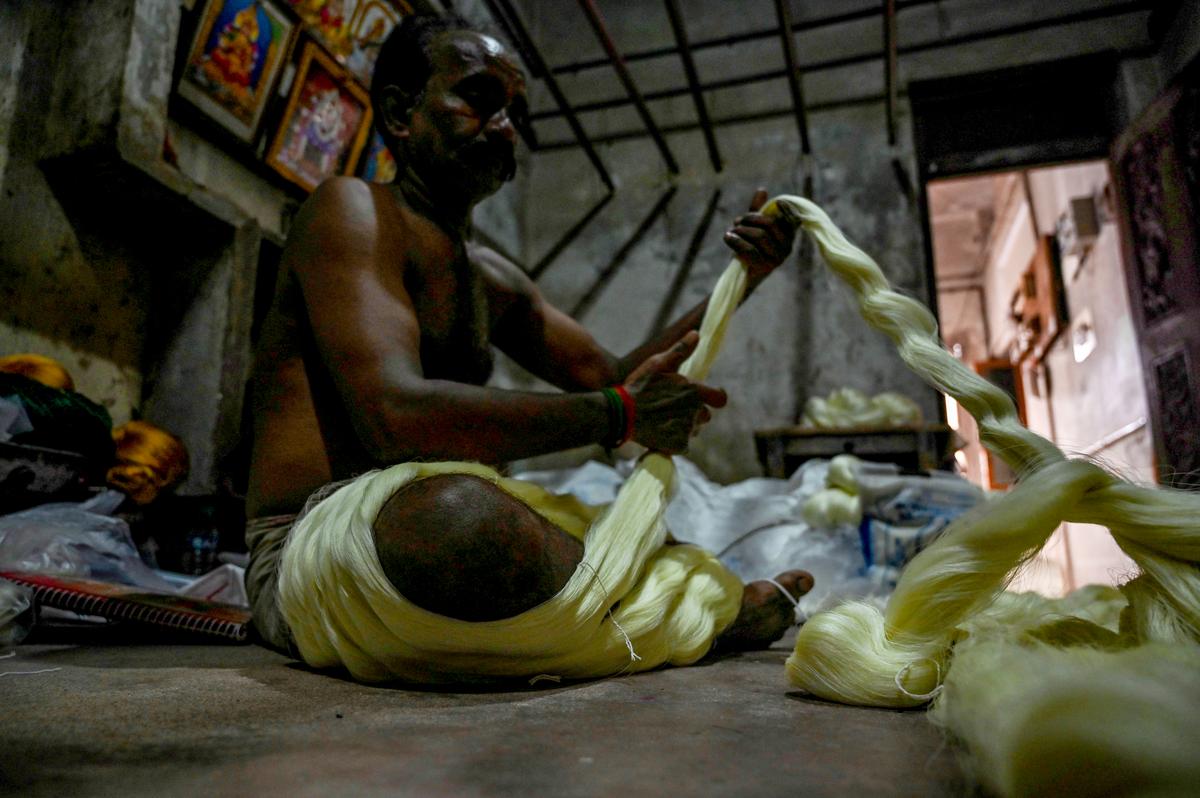
Photo:
Athullyea Padmanabhan
First threads: A weaver in Kancheepuram divides the raw silk yarn and winds the skeins for dyeing.
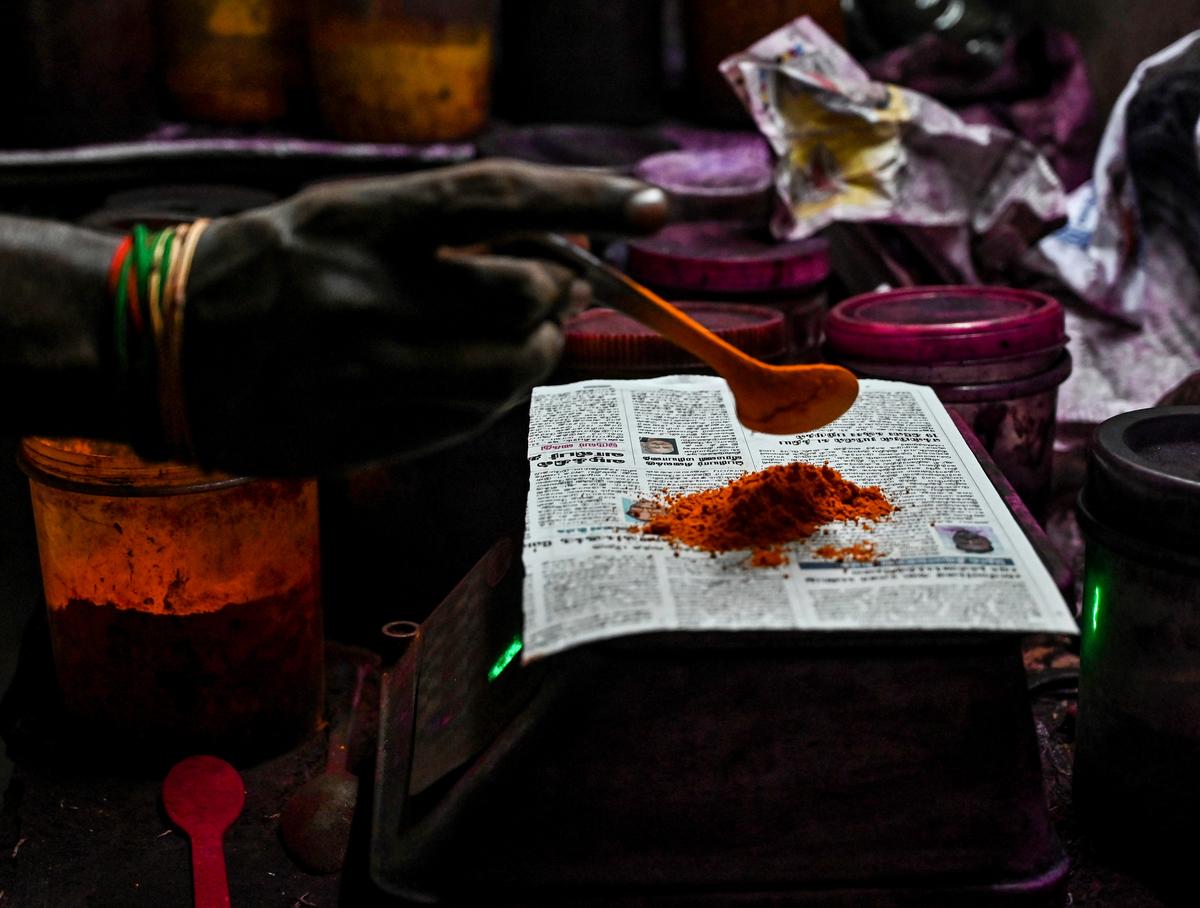
Photo:
Athullyea Padmanabhan
Deep hues: The quantity of dye powder to be used is measured out based on the intensity of the colour desired.
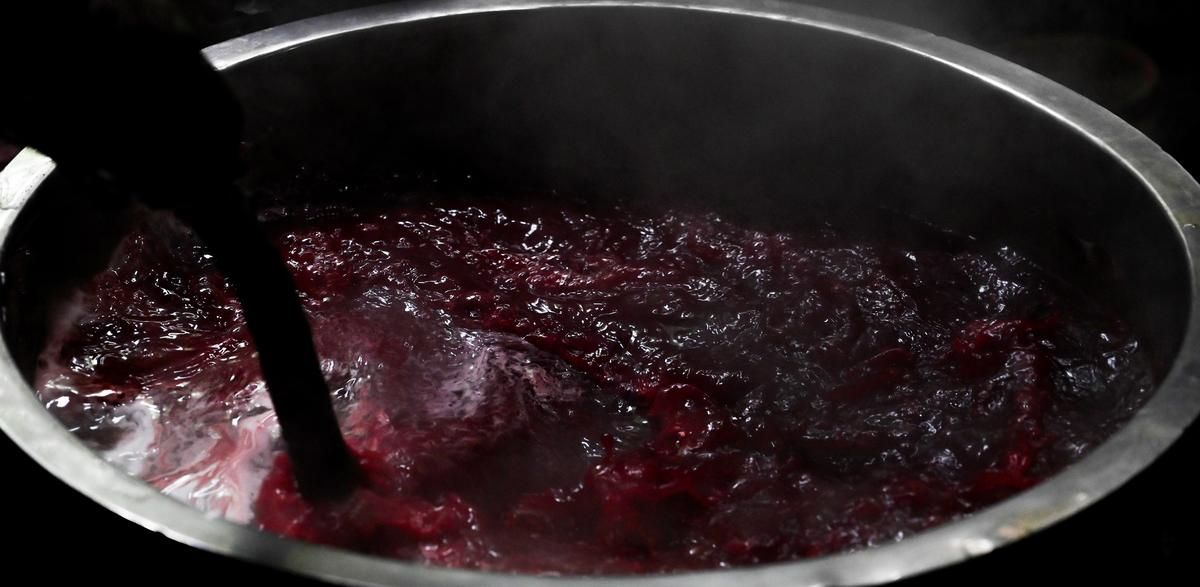
Photo:
Athullyea Padmanabhan
Beetroot red: Water is brought to a boil and then the dye added.
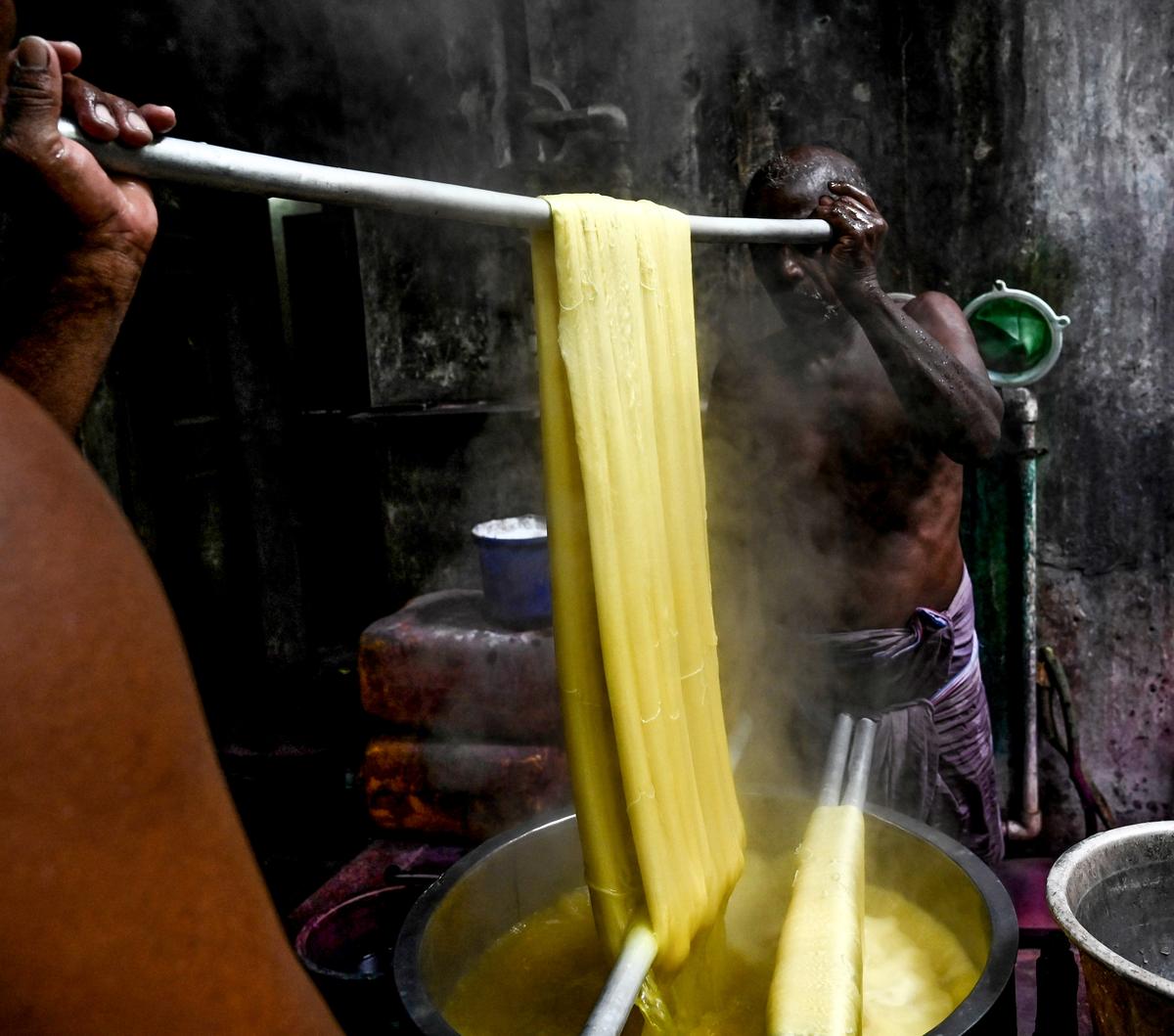
Photo:
Athullyea Padmanabhan
Handle with care: The skein of raw silk is dyed in such a way that it takes on a uniform colour.
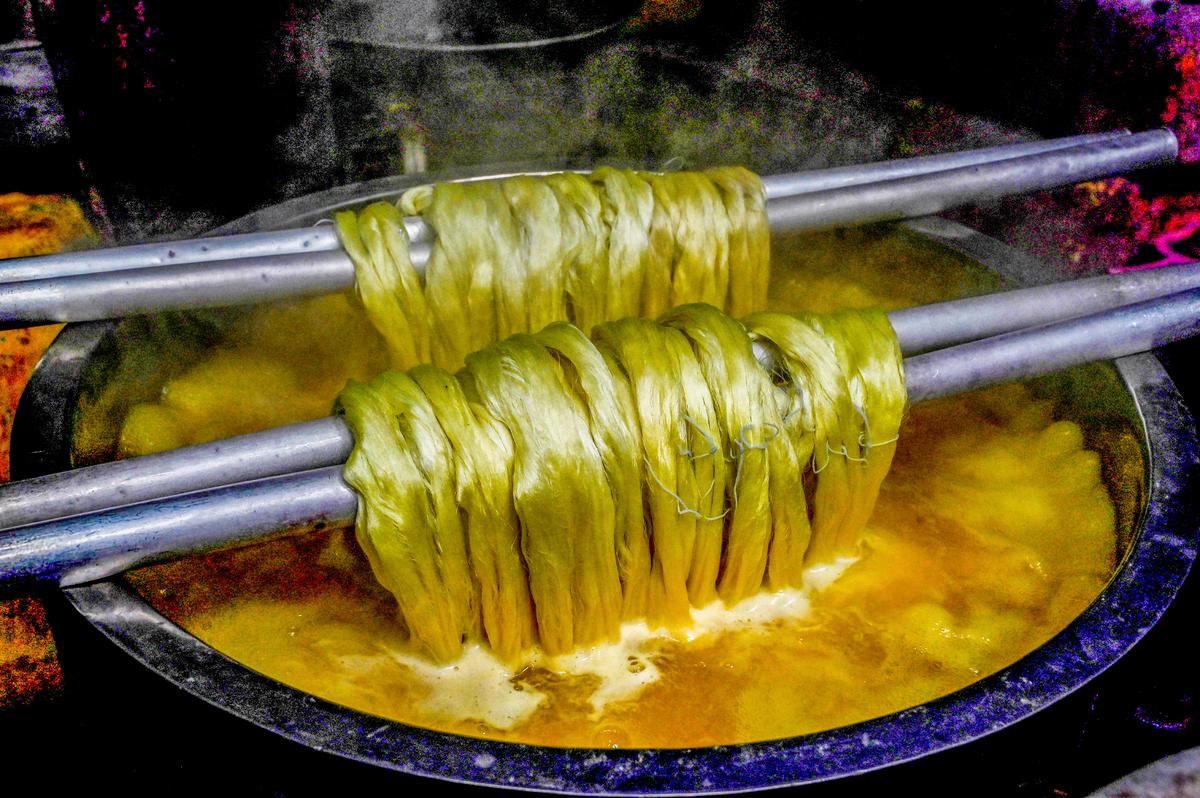
Photo:
Athullyea Padmanabhan
Getting ready: After the dye is added, the boiling is allowed to go on for some time, almost like cooking the colour into the thread.
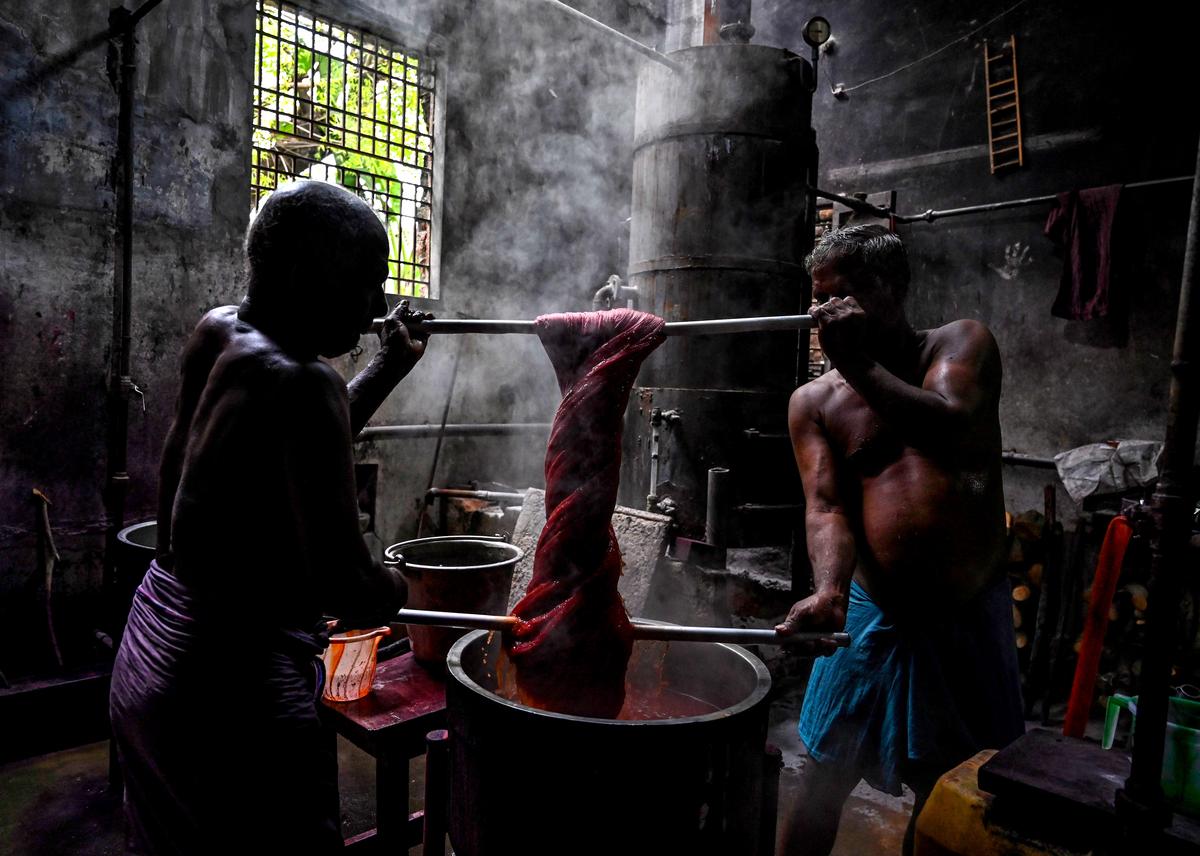
Photo:
Athullyea Padmanabhan
Fine art: The process of dyeing the silk is as much an art as it is physically demanding.
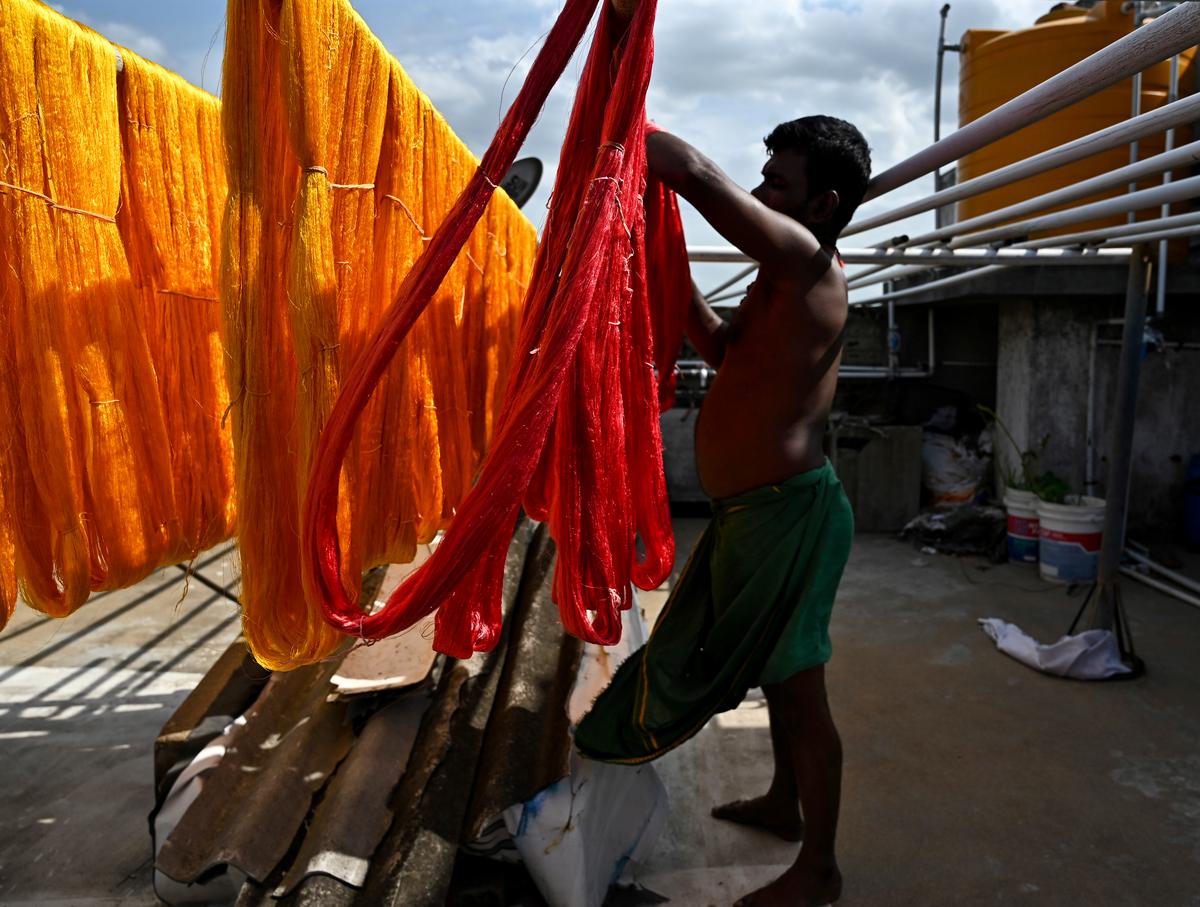
Photo:
Athullyea Padmanabhan
Hung up: The dyed silk yarn is placed under the sun for drying.
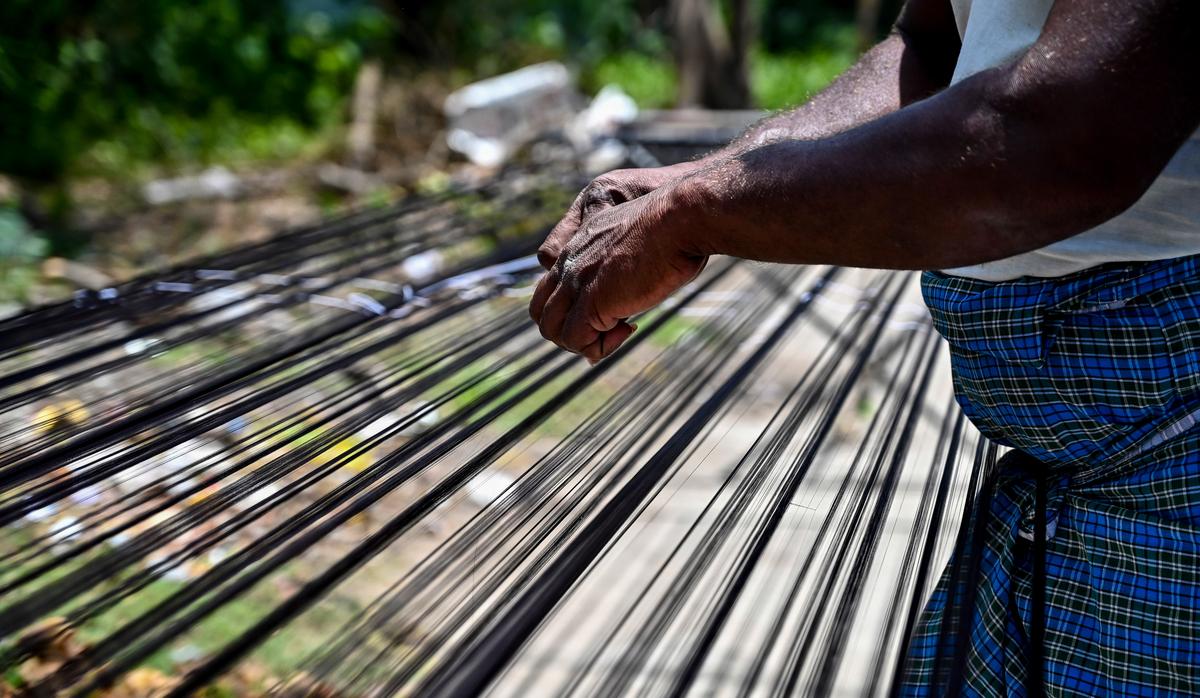
Photo:
Athullyea Padmanabhan
Straight lines: Warping is done to untangle any knots.
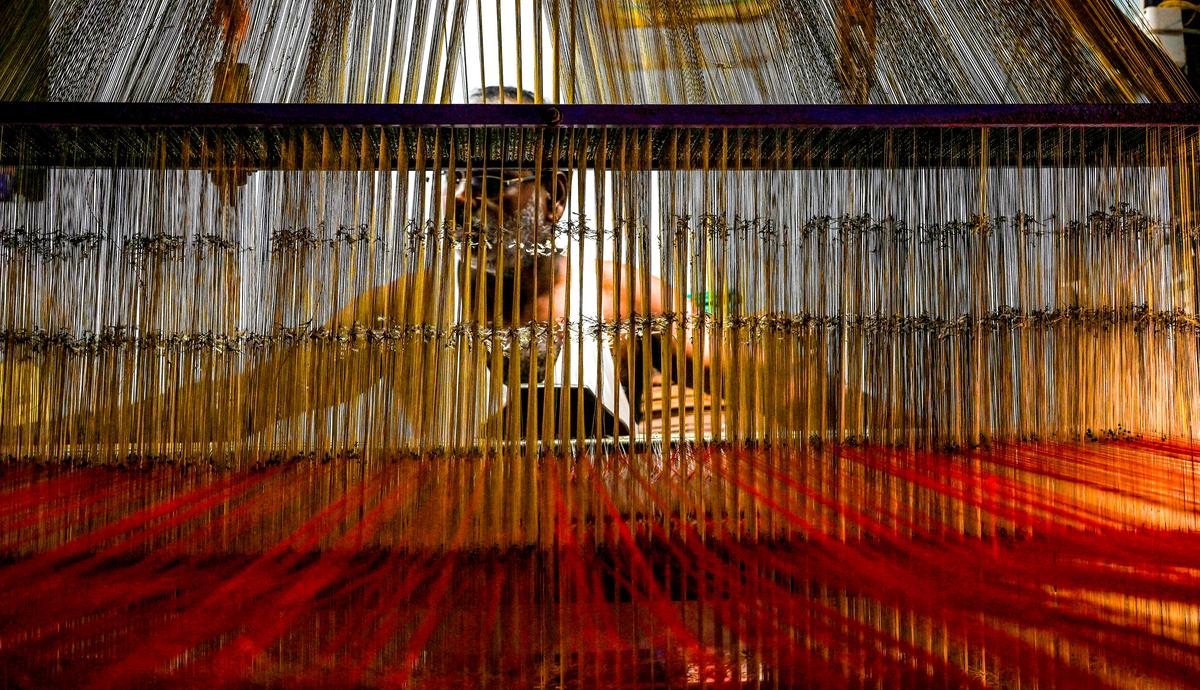
Photo:
Athullyea Padmanabhan
Fading skill: Master weaver Kandavel is hard at work. There are not many master weavers left now in Kancheepuram, as people are moving on to more lucrative professions. A weaver can at best weave not more than two or three saris in a month on a handloom.
[ad_2]
Source link
